

TL;DR:
- Improving property security involves layered hardware upgrades, professional installation, and risk-based assessments. Burglary-related losses emphasize the importance of sturdy entry point hardware, adequate lighting, and integrated alarm and surveillance systems. Regular audits and routines ensure ongoing protection and address vulnerabilities effectively.
Improving property security is defined as the process of hardening physical entry points, deploying detection systems, and establishing monitoring protocols to prevent unauthorized access and reduce loss. A burglary occurs every 26 seconds in the U.S., with each incident averaging $2,800 in losses. That number makes the cost of inaction concrete. The most effective approach combines ANSI Grade 1 deadbolts, reinforced structural elements, motion-activated lighting, and integrated surveillance into a layered system. This guide covers each method in order of impact, with specific hardware recommendations and a phased upgrade strategy built for property owners and managers.
How to improve property security at entry points
Entry points are the first line of defense, and they are also the most frequently exploited. Modern burglars bypass weak locks in under 30 seconds, which means a standard builder-grade lock offers almost no real protection. The fix is not complicated, but it requires the right hardware installed correctly.
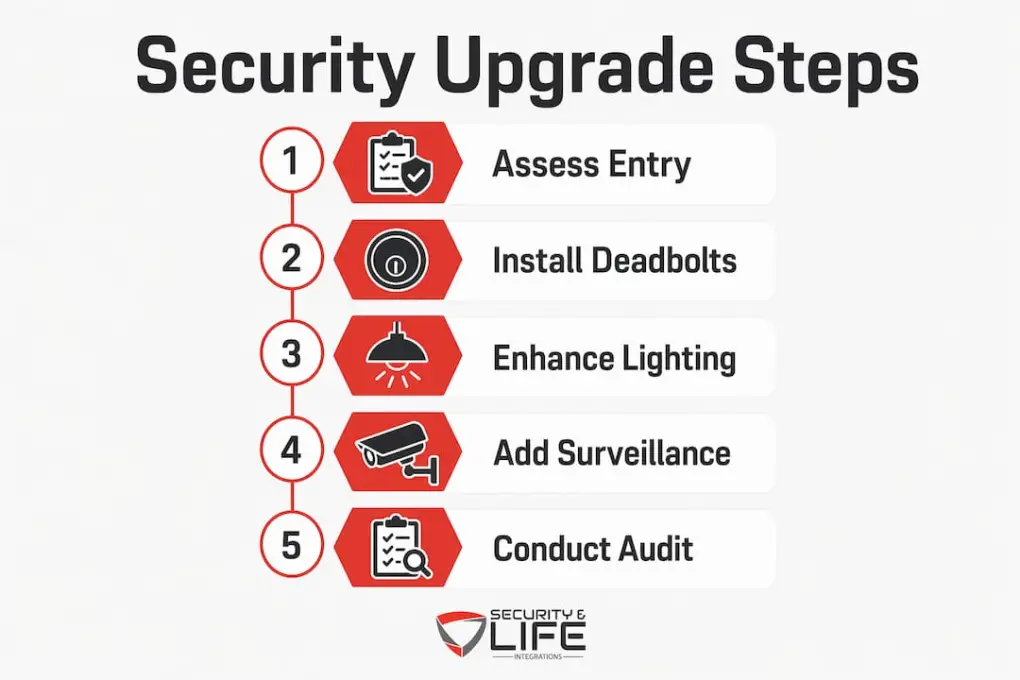
Deadbolts and strike plates
ANSI Grade 1 deadbolts are the recognized industry standard for residential and commercial door security. They resist both picking and physical force at a level that Grade 2 and Grade 3 locks cannot match. Pair them with a reinforced strike plate secured using 3-inch screws driven into wall studs, not just the door frame. Short screws in strike plates negate the hardware benefit entirely. A door with a Grade 1 deadbolt and a properly anchored strike plate can resist a kick-in force that would split a standard frame in seconds.
Multi-point locking and window security
Multi-point locking systems secure a door at three or more contact points simultaneously, which makes forced entry dramatically harder than a single-bolt setup. For commercial properties with aluminum-frame doors, anti-snap, anti-bump cylinders are the correct upgrade. Windows require a separate set of measures:
- Pin locks drilled through the sash frame prevent the window from being lifted or slid open even if the latch is defeated.
- Laminated glass holds together under impact rather than shattering, buying time and deterring opportunistic break-ins.
- Internal beading on double-glazed units removes the external bead that allows the glass panel to be popped out from outside.
- Side gates and internal garage doors are commonly overlooked entry points that burglars exploit when front doors are hardened.
Pro Tip: Have a licensed locksmith inspect every exterior door after hardware upgrades. Misaligned deadbolts and improperly seated strike plates are the most common installation errors, and both eliminate the protection you paid for.
What lighting and alarm setups actually deter intruders
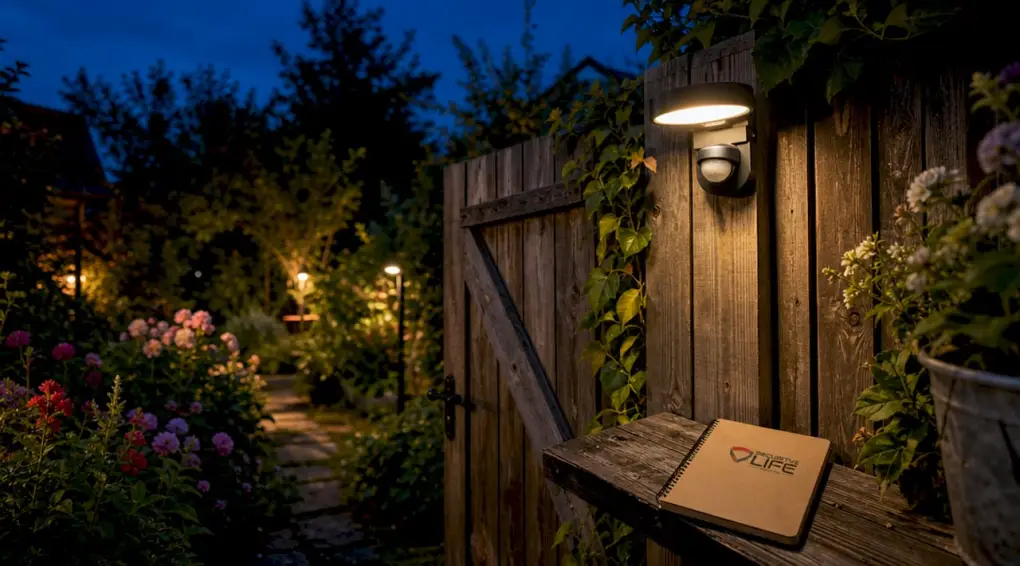
Lighting and alarms work on the same principle: they raise the perceived risk for anyone attempting unauthorized entry. The data on both is direct. Homes with professionally monitored alarms are three times less likely to be burglarized, and 95% of burglars flee immediately when an alarm sounds. That is not a marginal improvement. It is a fundamental shift in risk profile.
Setting up an effective deterrent layer involves four steps:
- Install motion-activated lights at all entry points. Place fixtures at a height of 8 to 10 feet to prevent tampering. Use units rated at 700 lumens or higher for driveways and parking areas, and 300 to 500 lumens for doorways and walkways. Motion-activated outdoor lighting removes hiding spots and forces intruders into visibility.
- Choose a professionally monitored alarm system. Self-monitored systems depend on you noticing an alert. Professionally monitored systems dispatch a response regardless of whether you are available. For multifamily housing and commercial properties, professional monitoring is the correct choice. You can review burglary alarm options that include monitoring as part of the service package.
- Integrate alarms with cameras and lighting. Integrated security systems allow coordinated responses, such as alarm-triggered floodlights and simultaneous camera recording. This removes the gap between detection and documentation.
- Post visible security signage. Alarm company signs and camera warning notices are a recognized deterrent. They signal that the property is monitored before an intruder tests the hardware.
Pro Tip: LED motion lights cost less to run than halogen equivalents and last significantly longer. For a property with 10 or more exterior fixtures, the operating cost difference over three years is substantial.
How does video surveillance compare: wired vs. wireless systems?
Video surveillance is the documentation layer of property security. It records what happens, supports insurance claims, and provides evidence for law enforcement. The choice between wired and wireless systems affects reliability, coverage flexibility, and long-term cost.
| Feature | Wired CCTV | Wireless cameras |
|---|---|---|
| Signal reliability | High. No interference from Wi-Fi congestion | Moderate. Dependent on network stability |
| Installation complexity | Higher. Requires cable runs | Lower. Faster to deploy and reposition |
| Power source | Hardwired. No battery management needed | Battery or PoE. Requires maintenance schedule |
| Storage | On-site NVR or DVR | Cloud or local. Cloud adds recurring cost |
| Scalability | Harder to expand without rewiring | Easier to add cameras as needed |
AI-enabled cameras represent the current leading edge of real-time threat detection in property surveillance. They analyze behavior patterns rather than just recording motion, which reduces false alerts and shortens response times. For large commercial properties or HOA communities, AI-assisted monitoring is worth the additional cost.
Camera placement strategy matters as much as the hardware itself. Discreet placement of multiple smaller cameras provides better coverage than a few large, obvious units. Color-matched housings reduce visual intrusion in high-end residential or commercial spaces. Key placement priorities include:
- All exterior entry and exit points
- Parking areas and loading zones
- Common areas in multifamily buildings
- Server rooms, cash handling areas, and storage in commercial properties
Securing networked cameras with strong passwords and two-factor authentication is non-negotiable. A camera system with default credentials is a liability, not an asset. For more on deploying surveillance effectively, the video surveillance facts resource from Security & Life Integrations covers the key decisions in detail.
How should property managers conduct a security audit?
A security audit is the structured process of identifying vulnerabilities before they are exploited. Risk-based phased upgrades consistently outperform attempts to fix everything at once. Budget spent on the highest-exposure vulnerabilities first delivers more protection per dollar than diffuse spending across the entire property.
Follow this sequence:
- Walk every entry point. Test every exterior door, window, gate, and garage access. Document lock grades, frame condition, lighting coverage, and camera blind spots. Note any access points that are routinely left propped open or unsecured.
- Categorize vulnerabilities by risk level. High-risk items include unsecured main entries, non-functioning alarms, and unlit parking areas. Medium-risk items include outdated lock hardware and gaps in camera coverage. Low-risk items include cosmetic issues and minor lighting gaps.
- Build a phased upgrade schedule. Address all high-risk items in the first 30 days. Schedule medium-risk upgrades within 90 days. Assign low-risk items to the next budget cycle. This approach is consistent with effective security budget allocation recommended by professional auditors.
- Avoid common upgrade mistakes. Over-investing in one area while leaving another unaddressed is the most frequent error. A property with a premium camera system and a hollow-core front door is not secure. Physical security effectiveness also depends on organizational measures: staff training, key control policies, and regular review cycles.
Pro Tip: Schedule a follow-up audit 90 days after completing each upgrade phase. New vulnerabilities often appear after changes, particularly when contractors modify access points during installation.
For property managers planning a full security review, the property manager’s upgrade guide from Security & Life Integrations provides a structured planning framework.
Key takeaways
Effective property security requires layered hardware, professional installation, integrated systems, and a risk-based upgrade process applied in sequence.
| Point | Details |
|---|---|
| Start with entry point hardware | ANSI Grade 1 deadbolts and 3-inch screw strike plates are the highest-impact first upgrade. |
| Layer lighting and alarms | Professionally monitored alarms reduce burglary risk by 3x when combined with motion-activated lighting. |
| Choose surveillance strategically | Multiple discreet cameras with AI detection outperform a few large units in both coverage and deterrence. |
| Audit before you spend | A risk-based audit prevents budget waste and directs spending to the highest-exposure vulnerabilities first. |
| Integration multiplies effectiveness | Alarm-triggered lighting and coordinated camera recording close the gap between detection and response. |
What most security guides get wrong about installation quality
Most articles on property security focus on what to buy. The harder problem is how it gets installed. I have seen properties with Grade 1 deadbolts that offered almost no protection because the strike plate was held in with half-inch screws. The hardware was correct. The installation was not.
The same pattern appears with camera systems. A property manager invests in a solid 16-camera setup, and then the installer mounts two of them pointing directly into a light source, rendering the footage useless after dark. No amount of hardware quality compensates for poor placement or a rushed installation.
The other mistake I see consistently is concentration risk. A property will have excellent front door security and a completely unsecured side gate, or a monitored alarm system with no lighting in the parking area. Intruders do not test the strongest point. They find the weakest one.
The most durable security improvements come from treating the property as a system, not a list of individual upgrades. That means auditing the whole perimeter, addressing gaps in sequence, and reviewing the setup after every change. It also means building routines: rekeying after staff turnover, checking camera feeds monthly, and testing alarm response times twice a year. Hardware depreciates. Routines do not.
— Zachary
How Security & Life Integrations can protect your property
Security & Life Integrations provides professional installation and management of burglary alarm systems, video surveillance, and access control for residential, commercial, and HOA properties. Every system is configured to the specific layout and risk profile of your property, not a generic template.
The team at Security & Life Integrations handles the full process: site assessment, hardware specification, installation, and ongoing support. If you manage multifamily housing or a commercial facility and want a clear picture of your current vulnerabilities, the multifamily security risks resource is a useful starting point before scheduling a consultation.
FAQ
What is the most effective first step to improve property security?
Upgrading to ANSI Grade 1 deadbolts with reinforced strike plates secured by 3-inch screws is the single highest-impact first step. This addresses the most commonly exploited vulnerability at the lowest cost.
How do monitored alarm systems reduce burglary risk?
Homes with professionally monitored alarm systems are three times less likely to be burglarized, and 95% of intruders leave immediately when an alarm activates. Monitoring removes the dependence on the property owner being available to respond.
Should I choose wired or wireless cameras for my property?
Wired CCTV offers more reliable signal and no battery management, making it better suited for permanent commercial installations. Wireless cameras are easier to deploy and reposition, which works well for properties where coverage needs may change.
What is a property security audit?
A property security audit is a structured walkthrough of all entry points, lighting, alarm systems, and camera coverage to identify and categorize vulnerabilities by risk level. It is the required first step before any phased upgrade investment.
How often should security systems be reviewed?
Security systems should be tested and reviewed at least twice a year, and immediately after any staff turnover, renovation, or change to access points. Regular review cycles catch degraded equipment and new vulnerabilities before they are exploited.