

TL;DR:
- Effective access control relies on role-based policies and the principle of least privilege to reduce security risks. Regular reviews, automated workflows, and strict policies ensure permissions remain current and appropriate over time. Implementing zero-trust principles and continuous staff training enhances overall facility security and compliance.
Access control best practices are defined as the structured policies and technical methods that govern who can enter physical spaces or use digital resources based on verified identity and assigned role. Role-based access control (RBAC) combined with the principle of least privilege forms the foundation of any effective access management program. For property managers and business owners, getting this right means fewer security incidents, cleaner compliance records, and less operational friction. Security & Life Integrations works with facilities across multifamily housing, commercial properties, and specialized institutions to put these principles into practice.
1. Implement role-based access control aligned with job functions
RBAC is the most widely recommended starting point for any facility access program. The Canadian Centre for Cyber Security recommends RBAC with least privilege as the baseline method for granting permissions. Under RBAC, access is tied to a person’s role, not their individual identity, which makes permissions easier to manage at scale. A property manager at a 200-unit apartment complex, for example, assigns access profiles by role: maintenance staff, leasing agents, and security personnel each get a distinct permission set.

2. Apply the principle of least privilege to every access decision
Least privilege means every user gets access only to the areas and systems required to do their job, and nothing more. This single rule reduces the blast radius of any security incident. If a contractor’s credentials are compromised, limited access means limited damage. Apply this principle at every level: physical doors, digital systems, and cloud platforms.
3. Enforce multi-factor authentication for sensitive access points
Multi-factor authentication (MFA) requires users to verify identity through two or more methods before gaining entry to privileged or sensitive areas. TechTarget identifies MFA as a core IAM best practice for privileged accounts, alongside continuous monitoring. For a commercial property, this might mean a key fob plus a PIN code for server rooms or executive floors. MFA is not optional for high-risk access points.
4. Conduct regular access reviews and permissions audits
Permission creep is the gradual accumulation of access rights that users no longer need. It happens silently over months as people change roles, take on temporary projects, or move between departments. The Canadian Centre for Cyber Security advises quarterly reviews for privileged accounts and semi-annual reviews for standard accounts. Reviews triggered by role changes or employee departures are equally critical and should be treated as mandatory workflow steps, not optional follow-ups.
Pro Tip: Assign each access review to the direct manager of the account holder, not the IT or security team alone. Managers know whether a person still needs a specific access level. This simple step catches stale permissions that automated tools miss.
5. Separate duties for critical functions
Separation of duties (SoD) prevents one person from holding all the access needed to complete a sensitive transaction or operation without oversight. The Canadian Centre for Cyber Security recommends dividing responsibilities across financial transactions, system administration, and user management. In a property management context, the person who approves a vendor contract should not also be the person who grants that vendor physical access to the building. Splitting these functions creates a natural audit checkpoint.
6. Manage privileged and temporary access with strict controls
Privileged accounts, those with administrative or override capabilities, carry the highest risk if misused or compromised. Use separate accounts for administrative tasks versus daily work. Apply just-in-time access elevation, meaning privileges are granted for a specific window and automatically expire. Temporary access for contractors or vendors must be documented with a defined expiry date before it is activated. Privileged access management tools automate much of this process and generate audit logs that satisfy compliance requirements.
Service accounts and system credentials also need unique passwords and a regular rotation schedule. Shared credentials for shared systems are a common vulnerability in older facilities. Replacing them with individual service accounts takes time upfront but eliminates a significant audit risk.
7. Document and enforce a written access control policy
An effective access control policy covers scope, resource classification, role definitions, request and approval processes, third-party access rules, authentication requirements, review schedules, exception handling, and regulatory mapping. Centraleyes outlines a 14-step policy creation process that addresses each of these elements. A policy that exists only in someone’s head is not a policy. Written documentation is what makes audits survivable and onboarding consistent.
The policy should also define what happens when someone needs access outside their standard role. Exception requests must include a business justification, an expiry date, and an approval signature. Without this structure, exceptions become permanent overrides that undermine access governance over time.
8. Build automated joiner, mover, and leaver workflows
Every credential lifecycle event, whether a new tenant moves in, a staff member changes roles, or a contractor’s engagement ends, should trigger a formal provisioning or deprovisioning workflow. IBM’s RBAC implementation guide stresses institutionalizing governance with automated lifecycle workflows to prevent standing over-privilege. Manual processes fail under volume. A 300-unit residential property with regular tenant turnover cannot rely on a checklist that someone remembers to run.
Automated workflows connect your HR or property management software to your access control system. When a lease ends, access is revoked without a manual step. This is where cloud-based access control platforms provide a measurable operational advantage over legacy hardware systems.
9. Include third-party and contractor access in your policies
Contractors, vendors, and service providers are among the most common sources of access-related security incidents. They often receive broader access than necessary and retain it longer than required. Your access control policy must define a separate onboarding process for third parties that includes identity verification, a scoped access profile, a defined engagement period, and a mandatory offboarding step. Treat every contractor credential as a time-limited asset, not a standing permission.
For multi-tenant housing and commercial facilities, this also means tracking which vendors have access to shared mechanical rooms, utility spaces, and back-of-house areas. These zones are frequently overlooked in access audits.
10. Apply zero-trust principles to access validation
Zero trust is the security model that requires identity verification for every access request, regardless of whether the user is inside or outside the network perimeter. TechTarget recommends zero-trust architecture and continuous access evaluation as a core IAM practice. For physical access control, this translates to not assuming that a badge scan at the front door grants implicit trust for all interior zones. Each sensitive area should require its own verification step.
Zero trust also means centralizing enforcement at the source of truth rather than relying on front-end checks alone. Centralized policy enforcement prevents inconsistencies that arise when different systems apply different rules to the same user.
11. Train staff and keep policies current
Access control policies decay without active maintenance. The Canadian Centre for Cyber Security advises updating policies based on audit findings and security incidents. Staff who do not understand why access rules exist will find workarounds. Annual training that explains the purpose of access restrictions, not just the rules themselves, produces better compliance than a policy document that no one reads.
Pro Tip: Run a tabletop exercise once a year where you walk through what would happen if a former employee’s credentials were used to access your facility. The gaps this exercise reveals are almost always more serious than what a standard audit finds.
Key takeaways
Effective access control requires RBAC, least privilege enforcement, automated lifecycle workflows, and continuous review to prevent permission creep and maintain compliance.
| Point | Details |
|---|---|
| RBAC and least privilege | Grant access by role and limit it to what each role actually needs. |
| Regular access reviews | Run quarterly reviews for privileged accounts and semi-annual reviews for standard accounts. |
| Automated lifecycle workflows | Connect HR and property systems to access control to automate provisioning and deprovisioning. |
| Written policy with exceptions | Document all access rules, approvals, and time-bound exceptions to prevent policy workarounds. |
| Zero trust and centralized enforcement | Validate identity at every access point and enforce decisions from a central policy source. |
What I’ve learned from watching access control programs fail
Most access control failures I’ve seen do not start with a sophisticated attack. They start with a former employee whose badge still works three months after they left, or a contractor who was given full floor access for a two-day job and never had it removed. The technical tools to prevent both scenarios have existed for years. The gap is almost always operational, not technological.
Property managers tend to treat access control as a setup task. You install the system, assign the credentials, and move on. What I’ve found is that the setup is the easy part. The hard part is building the review cycles, the offboarding checklists, and the exception approval process into your daily operations. Without those, even a well-designed RBAC structure degrades within 12 months.
The other thing I’d push back on is the idea that stricter access control creates friction that tenants and staff will resist. In practice, the opposite is true when the system is well-designed. A mobile credential that works reliably is less friction than a physical key that gets lost. A clear process for requesting temporary access is less frustrating than waiting for someone to manually unlock a door. The access control systems that generate the most complaints are the ones that were not configured with the user’s workflow in mind.
Effective access management is a program, not a project. It requires ownership, scheduled reviews, and a willingness to update policies when they stop reflecting how your facility actually operates. The organizations that get this right treat access governance the same way they treat financial audits: scheduled, documented, and non-negotiable.
— Zachary
How Security & Life Integrations supports your access control program
Security & Life Integrations designs and implements access control systems built around the best practices covered in this article, from RBAC configuration to automated credential lifecycle management.
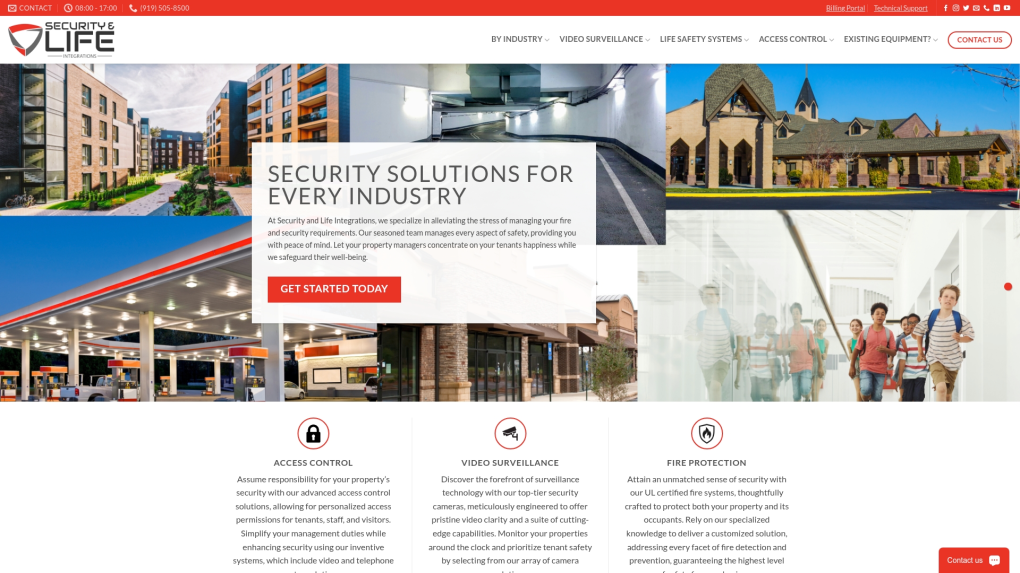
Whether you manage a multifamily residential property, a commercial office building, or a specialized facility, Security & Life Integrations provides tailored solutions that include cloud-based access control, mobile app management, integrated camera readers, and 24/7 monitoring support. Their team handles system design, installation, and ongoing governance support so your access policies stay current as your property evolves. Explore access control solutions or review options specifically built for multi-tenant properties to find the right fit for your facility.
FAQ
What is role-based access control in a facility context?
Role-based access control (RBAC) assigns access permissions based on a person’s job function rather than their individual identity. A maintenance technician, for example, gets access to mechanical rooms but not to administrative offices or financial records.
How often should access permissions be reviewed?
The Canadian Centre for Cyber Security recommends quarterly reviews for privileged accounts and semi-annual reviews for standard user accounts. Reviews should also run immediately when an employee changes roles or leaves the organization.
What is permission creep and why does it matter?
Permission creep is the gradual buildup of access rights that users accumulate over time beyond what their current role requires. It increases security risk because excess access creates more entry points for unauthorized activity if credentials are compromised.
How should temporary contractor access be managed?
Every contractor access credential should be created with a defined expiry date, scoped to only the areas needed for the specific job, and revoked immediately when the engagement ends. Documenting the approval and expiry before activation is a required step, not an optional one.
What is the difference between zero trust and traditional access control?
Traditional access control grants broad trust once a user is authenticated at the perimeter. Zero trust requires identity verification for every access request, at every zone, regardless of prior authentication. This model limits the damage from compromised credentials significantly.